• alternative music blog
  • Playlists
  • Contact
  • Index
  • Menu

Bla ck Plas tic .co .uk

THE BODY IS A DANCEFLOOR
  • alternative music blog
  • Playlists
  • Contact
  • Index

Test Icicles

For Screening Purposes Only

Sound Club featured album: For Screening Purposes Only by Test Icicles

September 24, 2026 in review, album review

This is a cross-post from my Sound Club music club, where I regularly share an album for listening and discussion. Check out the club here.

The mid-00s UK rock scene had become a relatively safe space. The rise of the Strokes and The White Stripes in the US had their own response on the other side of the Atlantic, but it had ultimately culminated in the concept of ‘landfill indie’. Kaiser Chiefs, Keane, and The Zutons knocked out rock songs with little new to say, and the likes of the Libertines were churning out a kind of garage punk that seemed more about the associated press narrative than the music.

Onto that canvas arrived Test Icicles — a group that are almost certainly more influential than they are good. The band rejected much of the mod-ish stylings of their peers, and embraced something more unpredictable — a kind of youthful, unpredictable exuberance. Neon, aggressive, and a little rave. Where the Libertines embraced poeticism and literary references, Test Icicles were pulling from speed metal, thrash, rave, and hip-hop.

Test Icicles seemed destined to implode from the beginning, and whilst their demise wasn’t actually that spectacular, they were short-lived. They produced just one album, and subsequently decided they didn’t actually like their music very much, before going their separate ways. Still, I have long argued their influence lasted much longer. British rock was about to change, and For Screening Purposes Only represented a kind of proto-blueprint.

Opening with Your Biggest Mistake, Test Icicles are cranked to 11 from the get-go. Angular guitars, distorted vocals, screams, synth stabs and a stop-start rhythms all come together to make a kind of thrash-punk that referenced predecessors, yet felt distinctly modern. It has a kind of bubble-gum throwaway feel to it, yet it is also remarkably inventive.

Singles Boa Vs. Python and Circle. Square. Triangle appear in sequence, like they are in some sort of face off. The former, with its kind of early internet topic referencing title, is a garage punk song that winds itself up before getting to a point where it feels like the band just can’t hold the riff in any more. Vocals and guitars spool out like spring-loaded snakes flying out of a can. The presumably PlayStation-referencing Circle. Square. Triangle is the closest the band ever came to a bona fide hit — steely guitar riffs soar as Sam Mehran’s vocals arc. The band frequently shift from harmonies to squeals and back, like a 17-year-old kid crunching the gears in a Ford Escort on the motorway, accidentally slamming it into second rather than forth and hearing the engine scream. It’s a thrilling piece, and has a video that may well be the most mid-00s thing I’ve ever seen.

Elsewhere, things are even more experimental. Catch It! is ridiculous — grime, low-end bass and compressed vocals all converging on some sort of musical black hole, like genres converging on an event horizon.

The final single on the album, What’s Your Damage? is the musical equivalent of putting metal in the microwave and turning it on just to see what happens. Pressure builds, with no obvious release valve. Once again the band crash from melody to distortion with aplomb. All You Need Is Blood is possibly the most mainstream things get, vocals actually converging on one another, at least between the now obligatory screams. Dancing On Pegs bounces on a booming drum beat, before the album closes on the (TMNT referencing? Probably) Party On Dudes (Get Hype!) and a cacophony of a ghost track called What’s Michelle Like. The latter is likely not even a listen-once-kind-of-thing.

Beyond the time capsule confines of the album itself were a clutch of remixes. What’s Your Damage? saw a pretty mental remix from Alan Braxe and Fred Falke, a young James Ford did something a little more balanced with Circle. Square. Triangle, whilst Boa Vs. Python was translated into a grime track by Lethal Bizzle, amongst others. Digitalism and Spank Rock also turned in remixes. The diversity of artists and styles say something about where Test Icicles were operating — and it was very much across conventional genre lines, their fans not genre fans, but there for the vibe. I suspect all of those artists took as much from Test Icicles as they gave here. Not bad for a bunch of kids.

It’s what happened next that really matters, though. The UK suddenly became enamoured with one of the last proper mainstream “scenes” we ever got … the Klaxons arrived; packaging similar ideas as Test Icicles into a slightly less chaotic package, and suddenly neon was everywhere. We were in a beautifully weird punk-dance-metal crossover moment: nu rave was born. More on that with a future album, of course, but ultimately neither the Klaxons nor the scene they operated within lasted.

Our story has a coda, however, as out of the ashes of Test Icicles rose one of Britain’s most inventive musicians — Devonté Hynes. With a career that went on to see production credits with Solange, Haim and Carly Rae Jepsen, as well as collaborations with Caroline Polachek, A$AP Rocky, and (ahem) P Diddy, he has quietly touched many corners of music. More on him in due course too.


The mid-00s UK rock scene had become a relatively safe space. The rise of the Strokes and The White Stripes in the US had their own response on the other side of the Atlantic, but it had ultimately culminated in the concept of ‘landfill indie’. Kaiser Chiefs, Keane, and The Zutons knocked out rock songs with little new to say, and the likes of the Libertines were churning out a kind of garage punk that seemed more about the associated press narrative than the music.

Onto that canvas arrived Test Icicles — a group that are almost certainly more influential than they are good. The band rejected much of the mod-ish stylings of their peers, and embraced something more unpredictable — a kind of youthful, unpredictable exuberance. Neon, aggressive, and a little rave. Where the Libertines embraced poeticism and literary references, Test Icicles were pulling from speed metal, thrash, rave, and hip-hop.

Test Icicles seemed destined to implode from the beginning, and whilst their demise wasn’t actually that spectacular, they were short-lived. They produced just one album, and subsequently decided they didn’t actually like their music very much, before going their separate ways. Still, I have long argued their influence lasted much longer. British rock was about to change, and For Screening Purposes Only represented a kind of proto-blueprint.

Opening with Your Biggest Mistake, Test Icicles are cranked to 11 from the get-go. Angular guitars, distorted vocals, screams, synth stabs and a stop-start rhythms all come together to make a kind of thrash-punk that referenced predecessors, yet felt distinctly modern. It has a kind of bubble-gum throwaway feel to it, yet it is also remarkably inventive.

Singles Boa Vs. Python and Circle. Square. Triangle appear in sequence, like they are in some sort of face off. The former, with its kind of early internet topic referencing title, is a garage punk song that winds itself up before getting to a point where it feels like the band just can’t hold the riff in any more. Vocals and guitars spool out like spring-loaded snakes flying out of a can. The presumably PlayStation-referencing Circle. Square. Triangle is the closest the band ever came to a bona fide hit — steely guitar riffs soar as Sam Mehran’s vocals arc. The band frequently shift from harmonies to squeals and back, like a 17-year-old kid crunching the gears in a Ford Escort on the motorway, accidentally slamming it into second rather than forth and hearing the engine scream. It’s a thrilling piece, and has a video that may well be the most mid-00s thing I’ve ever seen.

Elsewhere, things are even more experimental. Catch It! is ridiculous — grime, low-end bass and compressed vocals all converging on some sort of musical black hole, like genres converging on an event horizon.

The final single on the album, What’s Your Damage? is the musical equivalent of putting metal in the microwave and turning it on just to see what happens. Pressure builds, with no obvious release valve. Once again the band crash from melody to distortion with aplomb. All You Need Is Blood is possibly the most mainstream things get, vocals actually converging on one another, at least between the now obligatory screams. Dancing On Pegs bounces on a booming drum beat, before the album closes on the (TMNT referencing? Probably) Party On Dudes (Get Hype!) and a cacophony of a ghost track called What’s Michelle Like. The latter is likely not even a listen-once-kind-of-thing.

Beyond the time capsule confines of the album itself were a clutch of remixes. What’s Your Damage? saw a pretty mental remix from Alan Braxe and Fred Falke, a young James Ford did something a little more balanced with Circle. Square. Triangle, whilst Boa Vs. Python was translated into a grime track by Lethal Bizzle, amongst others. Digitalism and Spank Rock also turned in remixes. The diversity of artists and styles say something about where Test Icicles were operating — and it was very much across conventional genre lines, their fans not genre fans, but there for the vibe. I suspect all of those artists took as much from Test Icicles as they gave here. Not bad for a bunch of kids.

It’s what happened next that really matters, though. The UK suddenly became enamoured with one of the last proper mainstream “scenes” we ever got … the Klaxons arrived; packaging similar ideas as Test Icicles into a slightly less chaotic package, and suddenly neon was everywhere. We were in a beautifully weird punk-dance-metal crossover moment: nu rave was born. More on that with a future album, of course, but ultimately neither the Klaxons nor the scene they operated within lasted.

Our story has a coda, however, as out of the ashes of Test Icicles rose one of Britain’s most inventive musicians — Devonté Hynes. With a career that went on to see production credits with Solange, Haim and Carly Rae Jepsen, as well as collaborations with Caroline Polachek, A$AP Rocky, and (ahem) P Diddy, he has quietly touched many corners of music. More on him in due course too.

Tags: test icicles, dev hynes
Comment

The Artist Ren

Doin’ Fine!

Listen: Doin’ Fine! by The Artist Ren

September 19, 2026 in stream

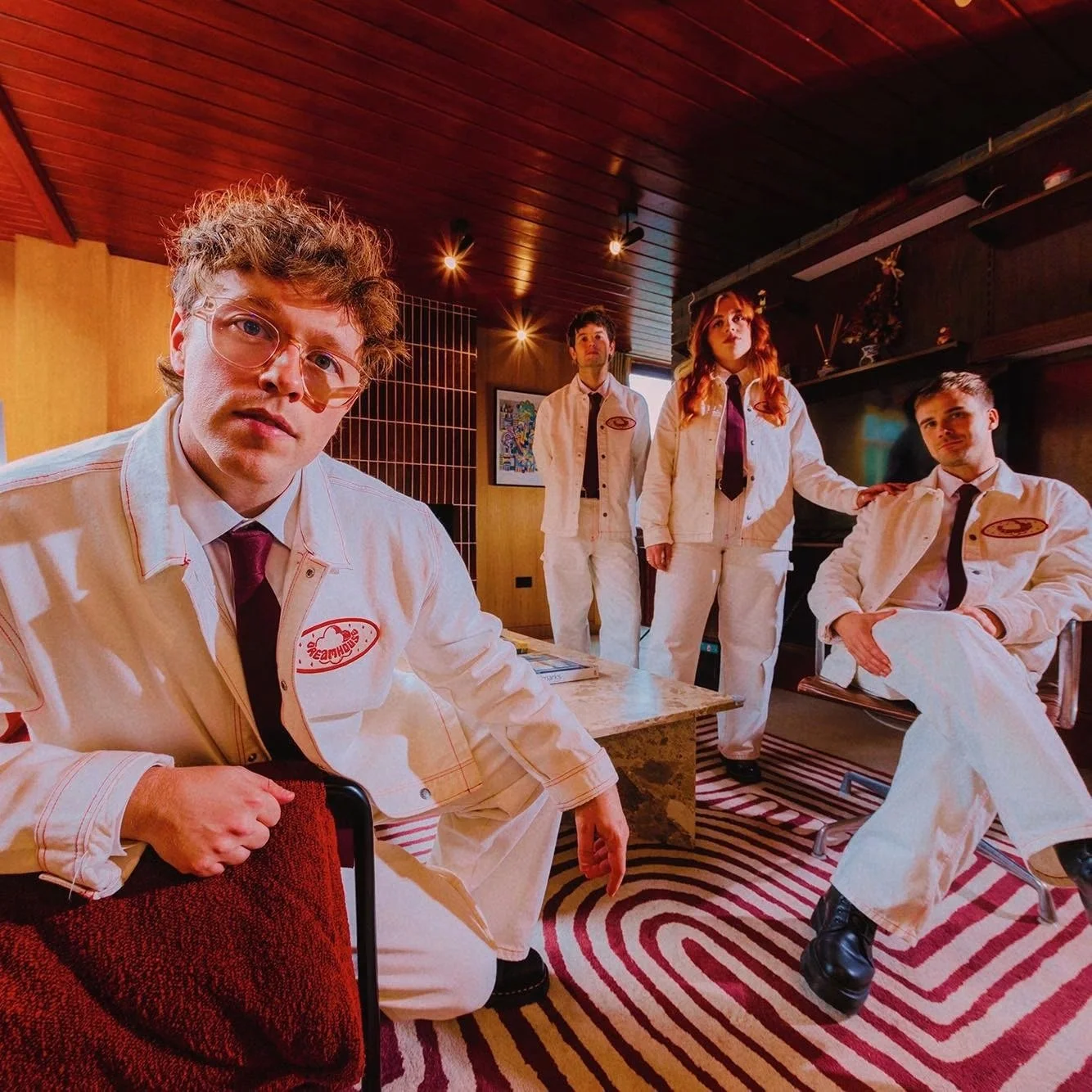
The Artist Ren is the musical project of Lauren Van Houten, who started creating music in 2020, during the early pandemic. With no label or management, she prides herself on working independently, and creating music that starts with a story. Lauren constantly makes notes on her phone — capturing thoughts, overheard conversations, things from media consumed, and imaginings.

Here on The Artist Ren’s latest single, Doin’ Fine!, sunny laid-back guitars meet a grungy swaggering bass line. The contrast at play in the instrumentation betrays the emotional through-current of the song itself, which centres on a relationship that is coasting in neutral.

Doin’ Fine!’s lyrics depict the small details that imply something isn’t quite right in your relationship — a forgotten birthday, misremembered preferences. At the same time the easy-breezy feel of the song’s instrumentation suggest that maybe it’s all okay. A break-up feels drastic and dramatic, doesn’t it?

Yet whilst the guitars retain their sunny, upbeat quality, The Artist Ren’s vocals become increasingly insistent. Just like those little signs in a relationship, the bass, and drums, become impossible to ignore… a thumping, visceral reminder that this isn’t the one.

Doin’ Fine! represents Ren’s first song in over a year. That time is not happenstance — it comes off of the back of some time out from making her debut album. During the gap, she spent a semester studying in Seoul, in South Korea. Doin’ Fine! is what came out of that time, musically. Describing the song, Lauren says:

“I feel like being able to talk with people from different countries and backgrounds while being abroad allowed me to hear so many new stories. I love writing songs about stories I’ve heard or imagined and Doin’ Fine! is no exception to that.”

In addition to listening in the post, you can find almost all the music BlackPlastic covers on the music player of your choice. Add the dedicated playlist below:
Apple Music

Spotify

Tags: The Artist Ren
Comment

Velar Prana

Tonight

Listen: Tonight by Velar Prana

September 18, 2026 in stream

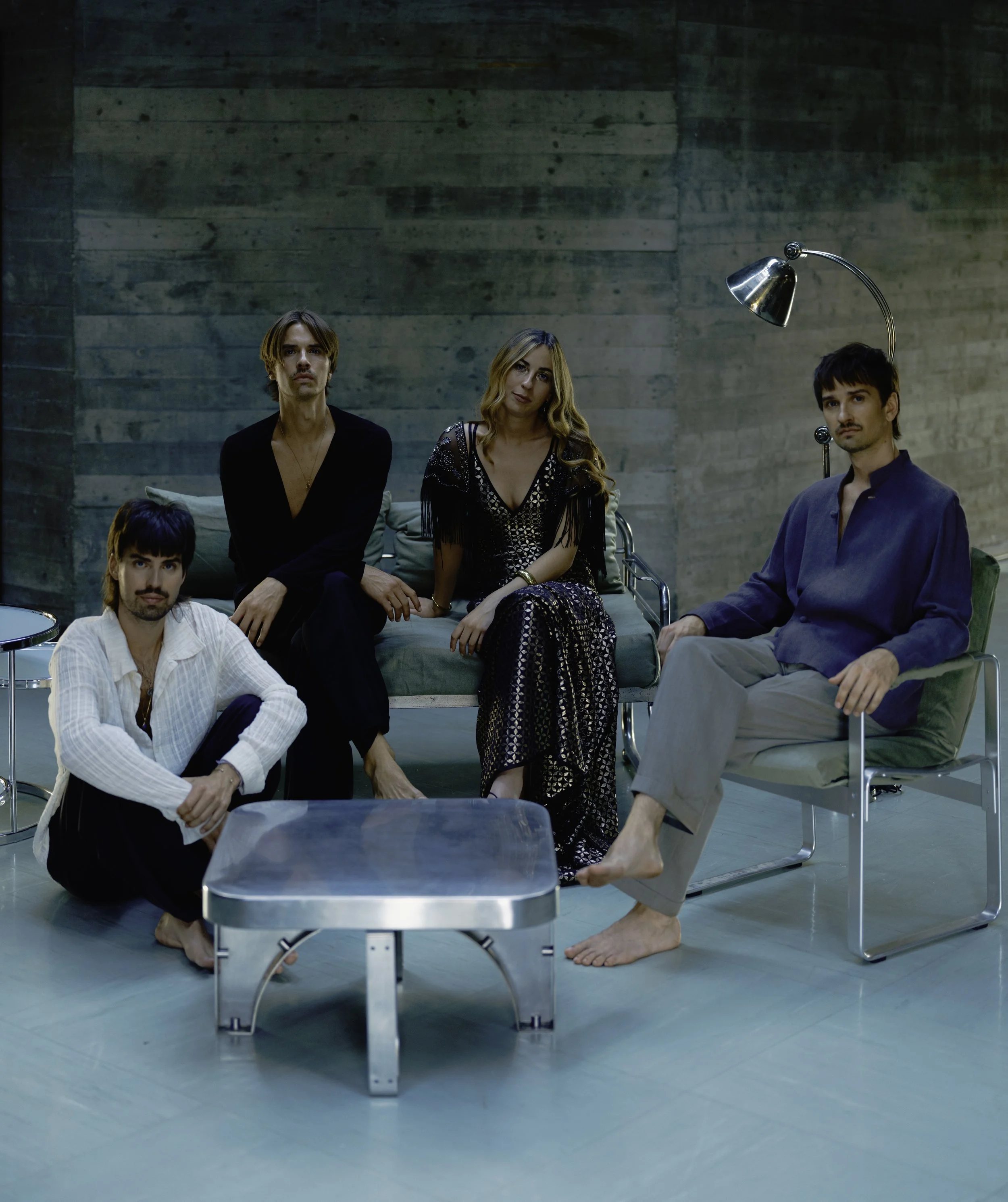
The latest single from Velar Prana, Tonight opens with a lush wave of sophisticated sound. Slithers of brass instrumentation weave in and out of themselves, soaring and fluttering, as warm and crispy bass establishes a feeling of sun-kissed movement.

Having spent endless nights at turntables through his years at school, Velar Prana now writes, records and produces music. His focus is on what you hear on Tonight — a kind of warm electro-pop that glitters and captures the feeling of summer, and good times.

As Tonight progresses, a restrained vocal portrays a simple story — people working to communicating, and landing with the intention to say things as they mean them. Synth notes echo and bounce as Prana layers together a dense soundscape, and overall the song leaves everything else to the imagination. The result is a piece of electronic music that is dense and atmospheric, about the vibe more than anything… A dash of melancholy mixed with a hint of hope, surrounded by so much beauty.

In addition to listening in the post, you can find almost all the music BlackPlastic covers on the music player of your choice. Add the dedicated playlist below:

Apple Music

Spotify

Velar Prana · Tonight
Tags: Velar Prana
Comment

Lelia

Hair

Watch: Hair by Lelia

September 17, 2026 in video

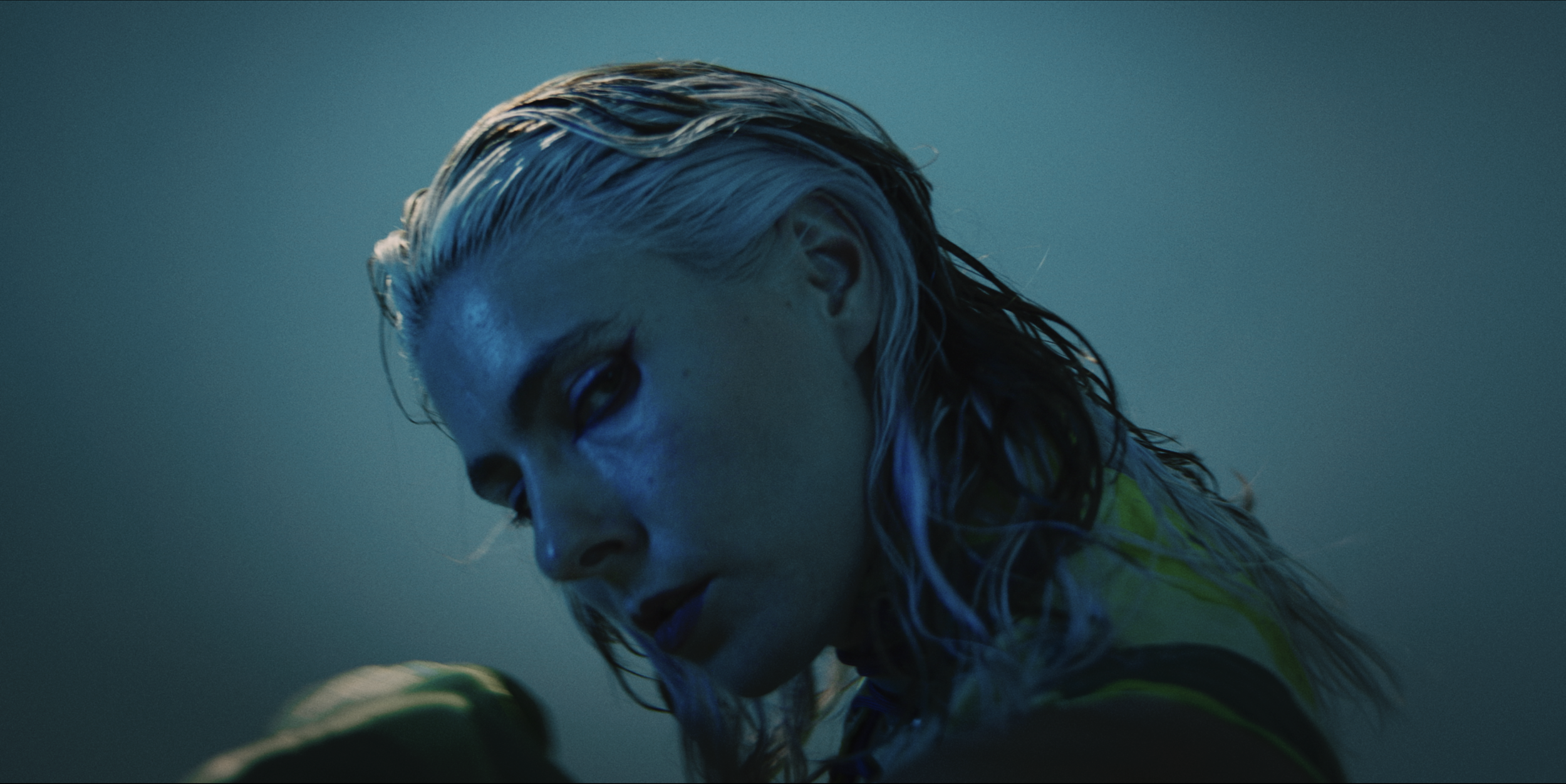
The new single from London-based artist Lelia, Hair starts with a ripping bass line and thumping drums, immediately delivering a dark sense of confrontation.

As an artist, Lelia builds her sound from a combination of thick synths, angular percussion, and direct confrontational vocals. With touchpoints that include artists who, on paper, appear very diverse — Lady Gaga, LCD Soundsystem, and PJ Harvey — Lelia weaves those references together to feel cohesive and, in retrospect, obvious. Of course the darkness of Harvey blends with Gaga’s penchant for drama, and the throbbing electronic post-punk rock of James Murphy underpins it all like a slowly boiled frog.

As we hear on Hair, the overall result is a beautiful cacophony. The third single taken from Lelia’s forthcoming debut album, Dark Disco, the song is an embrace of destruction, applying Daft Punk’s dance-forward production to a song that is a far more direct exploration of sex, desire, and identity.

Employing overdubbed vocals liberally against a backing that is grounded in grungy sounds and a hissing electro bass line, the sound here evokes a sense of size. Lumbering, heavy and formidable, Hair embraces exactly the kind of building details Murphy deals in — hi-hats and cow bell create a kind of disco punk crescendo as the song nears it’s conclusion. With a sound that is itself big, Lelia is deliberately evoking a feeling of scale, as she describes:

“It’s about rejecting everything material. If I make my hair as big as possible then, in a nod to Attack of the 50-Foot Woman (1958), I'll destroy anything in my path in the quest to dance and be free.”

I love the intersection of genres Lelia is channeling here, and can’t wait to hear more. Check out Hair below, and look for the album, Dark Disco, due 6 November.

In addition to listening in the post, you can find almost all the music BlackPlastic covers on the music player of your choice. Add the dedicated playlist below:

Apple Music

Spotify

Tags: Lelia
Comment

Meleetah

All That I Break

Listen: All That I Break by Meleetah

September 15, 2026 in stream

Based in Brisbane, Australia, electronic artist, producer, and multimedia artist Meleetah works with music and audiovisual mediums. Focused on a combination of electronic pop, future bass, and electronica, the artist is focused on creating immersive worlds with a strong sense of emotionally driven storytelling.

Here on All That I Break, Meleetah reflects on the possible reality that the things that fall apart in our lives don’t just happen to us — they are themselves a response to our choices and out behaviours. It reflects a shift from blaming the outside, to evaluating our own actions and taking responsibility for the role we play.

Opening with soft bell-like notes, All That I Break starts from a place of vulnerability. Meleetah’s vocals hang amidst a glittering soundscape of synths, like a chandelier casting light around a stark and empty room, before the song introduces deep sub-bass tones. The glassy aesthetic reflects a feeling of mirror-like reflection that runs through the song… You can almost feel Meleetah reaching out for images, trying to grasp and hold on to what is real. Is our pain actually of our own making, or are we a blameless victim? The result is a piece that shudders with a bold futurist aesthetic, and a depth of emotion.

Check out All That I Break below.

In addition to listening in the post, you can find almost all the music BlackPlastic covers on the music player of your choice. Add the dedicated playlist below:

Apple Music

Spotify

Tags: Meleetah
Comment
Prev / Next

About

BlackPlastic.co.uk is an alternative music blog focused on sharing the best electronic music.


No results found

Latest Posts

alternative music blog
Sound Club featured album: For Screening Purposes Only by Test Icicles
about 7 minutes ago
Listen: Doin’ Fine! by The Artist Ren
about 4 days ago
Listen: Tonight by Velar Prana
about 5 days ago
Watch: Hair by Lelia
about a week ago
Listen: All That I Break by Meleetah
about a week ago

Tweets